As an Amazon Associate I earn from qualifying purchases.
If you’re searching for a way to turn off your work brain before you scream, guided meditation offers a surprisingly effective escape hatch. I used to think I was far too overanalytical and caffeinated to ever achieve inner peace, but it turns out you don’t need a perfectly serene mind—or endless free time—to rewire how you respond to an unexpected text. Here is a breakdown of how guided meditation can help before a casual “Hey, do you have a quick second to talk?” completely ruins your week.
How Guided Meditation Calms the Anxious Mind
Guided meditation is basically meditating with the help of an audio track, app, or instructor who talks you through what to do. The whole point is to give your mind gentle instructions, so you don’t have to figure things out in silence. This can be super useful if your anxiety tends to make your thoughts jump around. Most guided meditations use a calm voice and relaxing music or sounds to keep things soft and supportive.
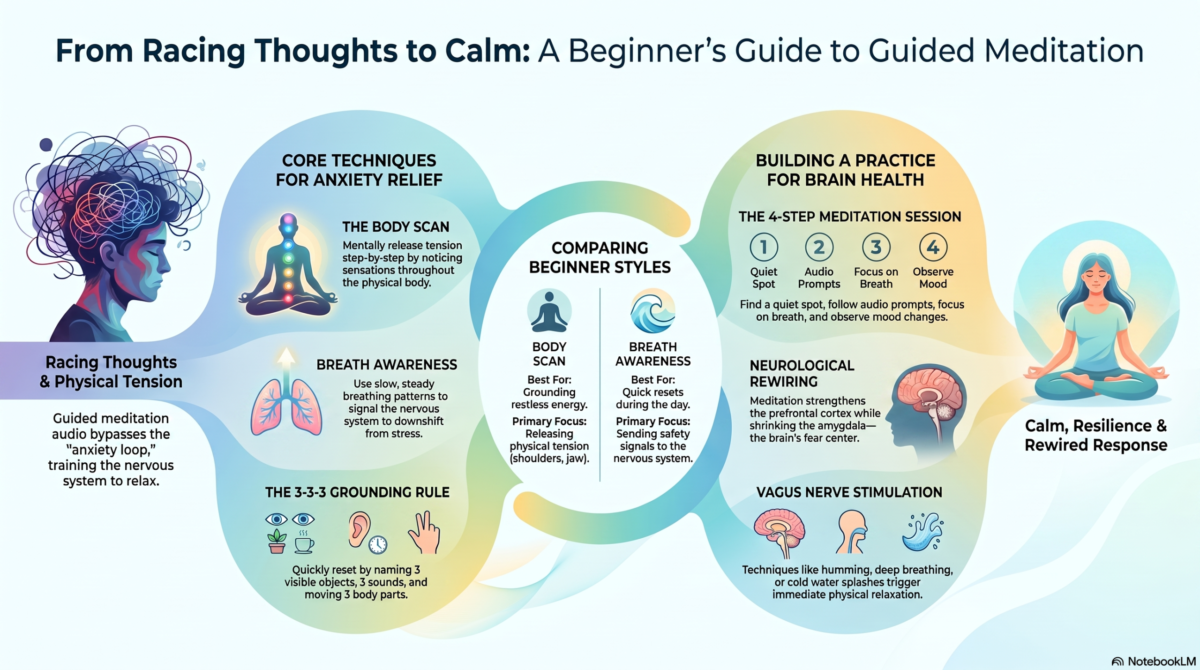
Anxiety often creates a loop of racing thoughts, physical tension, and high alertness, almost like being stuck on highspeed internet when your brain wants to be on plane mode. Guided meditations cut through this noise, helping you switch your attention to your breath, body, or a peaceful scene.
Over time, meditation trains your nervous system to relax more easily, making stress and anxiety much more manageable.
Getting Started with Guided Meditation for Anxiety Relief
Starting with guided meditation is actually pretty easy, even if you’ve never meditated before. All you need is a comfy space where you won’t be disturbed, a pair of headphones (totally optional, but often helpful), and a meditation audio or app. Some popular options include Calm, Headspace, and Insight Timer. I usually suggest trying out a few short sessions, say, 5 or 10 minutes, to see what style or voice feels best for you.
Many guided meditations for anxiety use techniques like body scans, breath awareness, or visualizations (like imagining a safe, cozy space). Others use positive affirmations or gentle reminders that whatever you’re feeling is temporary and workable. Apps often let you browse by length, mood, or even who’s guiding, so you’re never stuck with just one style. Some include soothing nature soundtracks, making it easier to relax deeply. If you’re not sure where to start, many popular meditation podcasts share free, high quality guided audio that you can try at your own pace.
- Body Scan: Guides you to notice different parts of the body and release tension step by step.
- Breathwork: Focuses on breathing patterns to switch the mind from anxiety to calm.
- Visualization: Uses imagination to create a sense of safety and comfort.
- Affirmations: Encourages positive selftalk and support in moments of fear or worry.
- Sound Meditations: Uses nature sounds, instruments or mantras to focus the mind.
Step-by-Step Guide: How to Use Guided Meditation in Moments of Anxiety
Guided meditation can be a quick pause in the middle of a busy day or a deeper practice you return to regularly. Here’s how I usually approach it in anxious moments:
- Find a Quiet Spot: If possible, find a quiet, comfortable space where you won’t be disturbed. You don’t need absolute silence—just a place where you can focus.
- Start the Audio or App: Hit play and follow the instructions as best you can. If your mind wanders (totally normal), gently return to the guide’s voice.
- Notice Your Breath: Most guided meditations bring your attention to your breath early on. Follow along, letting your breath slow naturally.
- Follow the Prompts: Whether it’s a body scan, visualization, or gentle affirmations, listen to each step and do what feels comfortable without judgment.
- Gently End the Practice: When it’s over, take a moment to notice if you feel any switch in your mood or energy. There’s no ‘right’ result. Anything you notice is valid, and even small mood changes over time can add up for anxiety relief.
I often recommend keeping your expectations light. Some days, you’ll feel instantly calmer, and on others, it might just take the edge off. Consistency tends to bring bigger benefits over time and helps you build a routine you can rely on in stressful moments.
Real-Life Challenges When Starting Meditation (And What Helps)
Just because guided meditation sounds easy doesn’t mean it always feels that way from the start. Many people (myself included) run into a few bumps, like:
- Restlessness or fidgeting: This is actually common, especially with anxiety. Short sessions help, and you can always pause if needed.
- Judging your own progress: It’s so tempting to rate yourself, but meditation works best when you let go of having ‘good’ or ‘bad’ sessions.
- Difficulty finding time: Even two minutes is better than zero. You don’t need a huge chunk of free time to get benefits.
- Doubt about whether it’s working: Some changes, like sleeping better or reacting less to stress, sneak up over time. Even when things don’t feel magical in the moment, the long game is worth it.
Remember, there’s no perfect session—each attempt counts toward building new habits that calm anxiety.
Body Scan vs. Breath Awareness: Which Is the Best Meditation for Anxiety?
The “best” meditation for anxiety often depends on what works for you. That said, two methods pop up again and again: body scan and breath awareness. In my experience, body scan meditations can be great for channeling restless energy into something gentle and grounding. You’re simply switching attention through the body and noticing sensations (no need to fix or judge anything). If your anxious feelings tend to show up as physical tension, like tight shoulders or a clenched jaw, body scan is worth checking out.
Breath awareness is also incredibly popular, especially for those who need a quick reset. Just focusing on slow, steady breaths can send your nervous system messages that it’s safe to relax. Try a few different styles to get a sense of what feels most soothing for you. I usually suggest starting with body scan if you’re new and sprinkling in breathwork during busier or more stressful days.
What Is the 3-3-3 Anxiety Rule?
The 3-3-3 rule for anxiety is a simple grounding technique that you can use anytime, anywhere. Here’s how it works:
- Look around and name three things you can see.
- Name three sounds you hear.
- Move and touch three parts of your body (like wiggling your toes, shrugging your shoulders, or clenching your fist).
This rule is super handy because it pulls your attention away from anxious thoughts and back to what’s actually happening around (and in) your body. I keep it in my back pocket for crowded places or public transport; no one even notices!
Quick Tips for Resetting Your Vagus Nerve
The vagus nerve is a big deal when it comes to anxiety and stress. It runs from your brain down to your gut, and it helps regulate mood, digestion, and even your heart rate. If you want to reset or calm the vagus nerve as quickly as possible, here are some easy tricks I use:
- Slow, deep breathing: Breathe in for a count of 4, out for 6. This signals safety to your body and can flip your nervous system from high alert to calm mode.
- Cold water: Splash some on your face or sip cold water. The temperature change can stimulate the vagus nerve and reset things fast.
- Humming or singing: It sounds odd, but the vibration in your throat activates your vagus nerve and signals relaxation.
Guided meditation often includes these (especially breathwork), giving your vagus nerve a gentle workout every time you practice. If you’re looking for an immediate way to calm down, try combining breathwork and humming for a double boost.
What Does Meditation Actually Do to the Vagus Nerve?
Meditation, especially styles focused on breathing and relaxation, can help tone the vagus nerve. When you practice slow breathing, your vagus nerve sends signals that it’s safe to downshift from stress. This can lower your heart rate, support digestion, and even improve immune function. In a sense, you’re teaching your body to bounce back from stress faster. Over time, a regular meditation practice helps your body become better at switching gears from tense to relaxed, making you more resilient against everyday stressors.
Neurologically, What Happens When You Meditate?
On a brain level, meditation has a pretty nextlevel cool impact. When you meditate, your prefrontal cortex (in charge of thinking and focus) lights up, while parts of the brain linked with fear and anxiety, like the amygdala, chill out. Over weeks and months, studies show that meditation can actually help shrink the amygdala and strengthen the connections that help you manage tough emotions. Results won’t happen overnight, but consistent practice rewires your brain’s pathways to make calm and focus a little more natural over time. It’s almost like a workout for your nervous system, making you more equipped to face stressful situations in the future.
Extra Tips: Keeping the Routine Doable and Enjoyable
Starting a guided meditation habit is much easier when you find ways to make it work for you. Here are a few tricks I rely on:
- Pick a regular time (like bedtime or right after waking).
- Have a comfy meditation space with a blanket, favorite chair or meditation seat.
- Stack meditation onto another habit, like drinking your morning coffee or stretching.
- Try a few different voices or meditation styles until you find one that feels right.
- Don’t worry about clearing your mind; the goal is just to practice switching attention, not to think about nothing.
You can also journal your experiences briefly after each session. Writing down even a word or two about how you feel can help you spot progress over time and remind you why you started.
Frequently Asked Questions
Question: What’s the best meditation for anxiety?
Answer: Body scan and breath awareness are at the top because they bring focus to the present moment and away from anxious thoughts. Guided meditation apps or recordings that use these methods are great starting points.
Question: What is the 3-3-3 anxiety rule?
Answer: It’s a grounding exercise: name three things you see, three things you hear, and move three parts of your body. I use it any time anxiety creeps up unexpectedly.
Question: What’s the quickest way to reset the vagus nerve?
Answer: Slow, deep breathing, cold water, or even humming all get the vagus nerve to help calm your system fast.
Question: What does meditation do to the vagus nerve?
Answer: It helps tone and strengthen the nerve, sending signals to your body that you’re safe and allowing you to calm down easier with practice.
Question: What happens neurologically when you meditate?
Answer: Meditation quiets the brain regions responsible for fear and anxiety and builds up connections that help you handle stress, leading to longer term calm.
How does meditation help your anxiety? What are your favorite tips? Leave me a comment below, and thanks for reading!
PS: Some of the links in this description are affiliate links – if used, I will get a small commission at no cost to you. It’s just one more way to supplement my teaching income. I only recommend things I use myself, that have really helped me personally or fully believe in! Thank you!