How is Burnout Different from Chronic Stress?

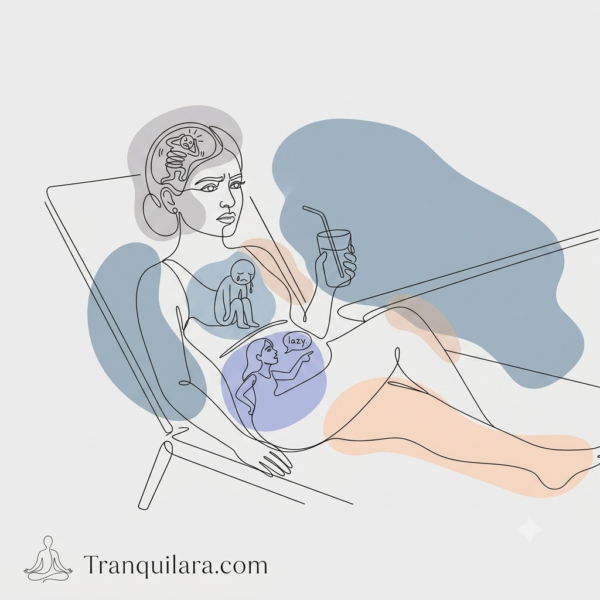
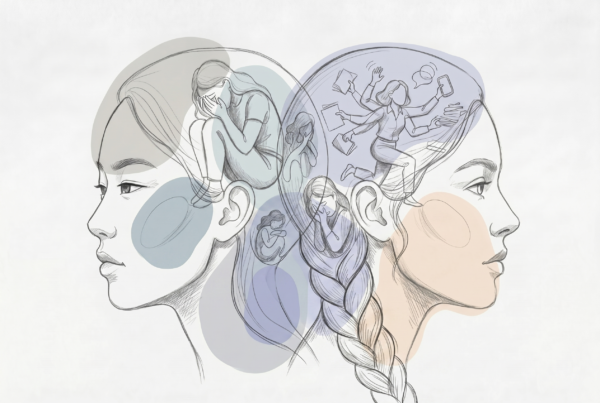
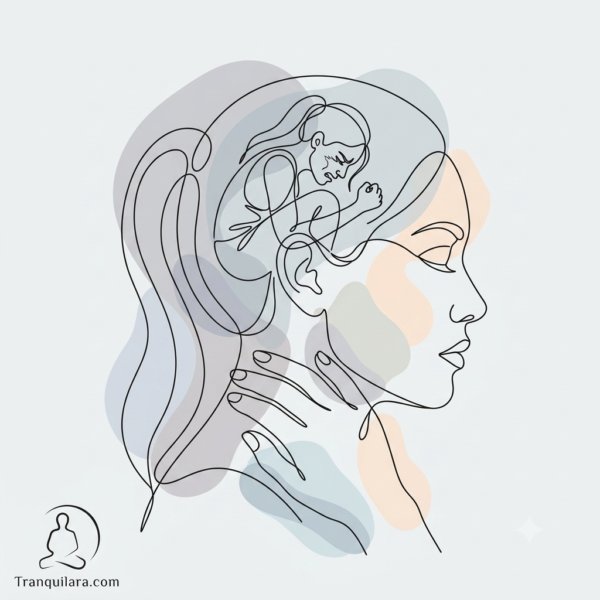
Two women back to back, one stressed and active, one burned out, curled up in a ball.

As an Amazon Associate I earn from qualifying purchases.

When I was deeply trapped in the thick of my classroom exhaustion, I assumed I was just dealing with a massive amount of everyday stress. I figured that if I could just get through the upcoming grading cycle, survive the next faculty meeting, or sleep for 48 hours straight over the weekend, I would miraculously snap back to my usual, highly patient self.

I didn’t realize that my nervous system had completely shifted states.

Beyond the Buzzwords: The True Science of Teacher Stress vs Burnout

In the wellness industry, the terms “chronic stress” and “burnout” are frequently thrown around as interchangeable buzzwords. Wellness influencers will happily sell you unverified supplements for marketing myths like “adrenal fatigue”—a scientifically debunked concept, given that your adrenal glands do not actually run out of cortisol.

Instead, peer-reviewed neurobiological research demonstrates that the real issue is a complex down-regulation of your central nervous system’s HPA (hypothalamic-pituitary-adrenal) axis and a profound shift within your autonomic nervous system. To truly recover, we must stop looking for quick-fix marketing trends and understand that chronic stress and burnout are completely different physiological realities.

Hyper-Arousal vs. The Freeze State: How Your Autonomic Nervous System Adapts

To understand the difference, we have to look at how your body adapts to prolonged pressures.

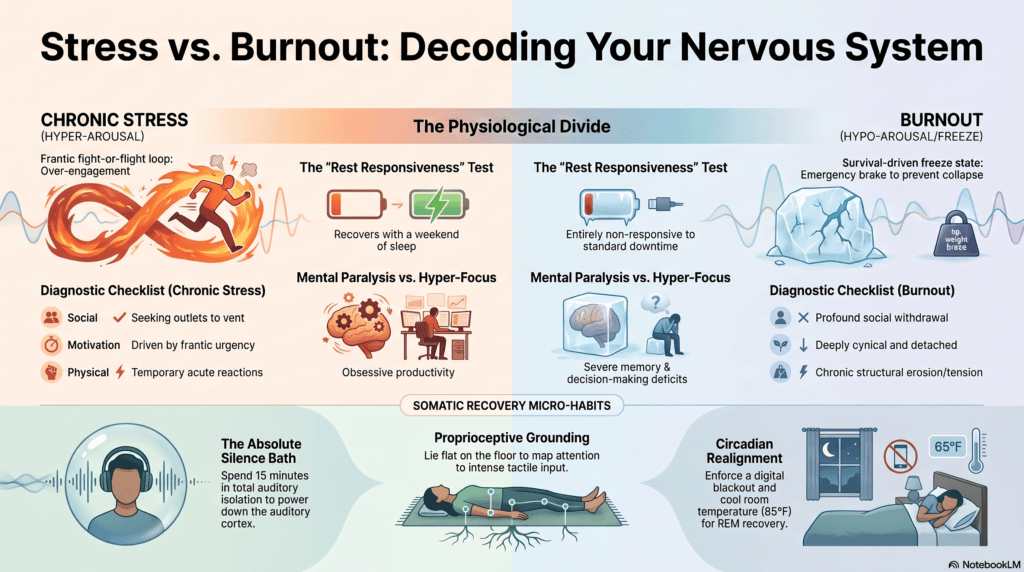
  • Chronic stress is a state of physiological hyper-arousal. It is characterized by over-engagement, hyper-reactivity, an overactive HPA axis, and a frantic sense of urgency. Your system is flooded with adrenaline and cortisol, keeping you locked in a permanent “fight-or-flight” loop.
  • Burnout, on the other hand, is a state of physiological hypo-arousal. It is a survival-driven “freeze” state. When chronic stress goes unmitigated for too long, the human body pulls its internal emergency brake to protect itself from total systemic collapse, resulting in disengagement, blunted emotions, and severe depletion.

Side-by-Side Comparison: 7 Burnout Red Flags vs. Chronic Stress

Because the recovery paths for hyper-arousal and hypo-arousal are completely different, you must diagnose where your nervous system is currently sitting. Here is how the seven classic warning signs of burnout present compared to chronic stress:

1. Constant Exhaustion vs. Stress Fatigue

  • Chronic Stress: You experience acute, fluctuating fatigue. You feel depleted after a heavy week, but your body remains responsive to standard rest; a solid weekend of sleep successfully replenishes your baseline energy.
  • Burnout: You experience unremitting, chronic physical and emotional exhaustion that is entirely non-responsive to standard downtime. You wake up profoundly tired regardless of how many hours of sleep you get.

2. Heightened Irritability and Rage vs. Stress Hyper-Reactivity

  • Chronic Stress: Your nervous system is hyper-reactive. Stress triggers acute bouts of anxiety, a racing heart, and a hurried pace as you scramble to meet immediate workplace demands.
  • Burnout: Your mental and emotional reserves are entirely depleted, causing your patience to completely wear thin. This goes far beyond standard anxiety; it manifests as an undercurrent of sudden rage, snapping at coworkers or students, and deep-seated resentment.

3. Brain Fog and Mental Paralysis vs. Stress Hyper-Focus

  • Chronic Stress: Frantic over-working. Under acute stress, adrenaline can occasionally trigger a temporary state of hyper-focus, driving you to obsessively cross tasks off your to-do list.
  • Burnout: You experience severe working memory deficits, an inability to process information, a major drop in decision-making capabilities, and a frustrating increase in careless errors. You face total mental paralysis where simple, daily tasks feel impossibly complicated.

4. Loss of Motivation and Cynicism vs. Stress Urgency

  • Chronic Stress: You are propelled by a frantic sense of urgency. You are highly invested in the outcome of your work, often leading to perfectionism and over-engagement.
  • Burnout: Total disengagement. Tasks that once brought you joy or purpose suddenly feel entirely pointless, and you develop a deeply cynical, detached, or numb outlook toward your responsibilities and colleagues.

5. Social Isolation vs. Stress Venting

  • Chronic Stress: You seek out social outlets to franticly vent about your day. While you may feel overwhelmed around people, you still actively seek connection to process your stressors.
  • Burnout: You experience a profound social withdrawal. Because interacting with others feels like a massive drain on your remaining energy, you find yourself actively avoiding friends, canceling plans, and pulling back from collaborative spaces just to cope.

6. Physical “SOS” Signals vs. Acute Stress Responses

  • Chronic Stress: You experience temporary, acute physical reactions—such as a brief knot in your stomach before a presentation or occasional muscle tightness after a frantic day.
  • Burnout: Your body carries chronic, structural physical erosion. This manifests as persistent tension headaches, muscle aches, altered appetite, upset stomachs, or a severely weakened immune system that leaves you vulnerable to frequent colds.

7. Rest Non-Responsiveness vs. Rest Responsive Stress

  • Chronic Stress: Your stress is responsive to standard self-care. A weekend getaway, a warm bath, or a short vacation successfully resets your nervous system and restores your motivation.
  • Burnout: Typical downtime or weekends off completely fail to restore your energy. Because the exhaustion has become deeply chronic, you cannot simply take a quick break; you must actively address the systemic root causes of your stress to heal.

Somatic Recovery Strategies to Safely Shift Out of Systemic Exhaustion

If you are dealing with everyday chronic stress, traditional lifestyle management—like time-blocking, setting standard boundaries, and regular cardiovascular exercise—can successfully clear acute stress hormones from your system.

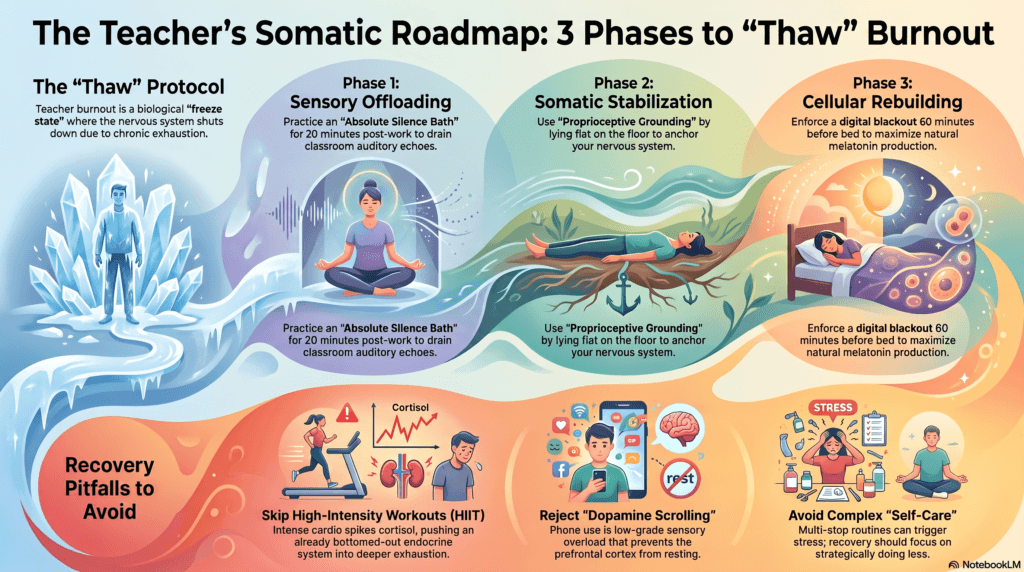
However, if your system has dropped into a burnout “freeze” state, you cannot think or exercise your way out of it. You must use targeted, physical, and behavioral somatic micro-habits to safely signal to your brain that the threat environment has dissolved, allowing your body to down-regulate cleanly.

Here are five verified, zero-dollar behavioral habits to transition your nervous system out of burnout, along with Health Savings Account (HSA) and Flexible Spending Account (FSA) Eligible upgrades to cover these medical support items and maximize your relief:

  • To Combat Irritability and Auditory Overload (The Absolute Silence Bath): Commit to 15 minutes of absolute, uncompromised auditory isolation the moment you cross your threshold at home. Turn off the radio, silence your phone, and sit in a quiet room to allow your vibrating auditory cortex to power down cleanly.

  • To Release Physical “SOS” Muscle Tension (Neuro-Muscular Release): Perform a 5-minute progressive somatic release by dropping your shoulders away from your ears, executing slow, mindful chin tucks, and rolling your neck side to side. Pair this with a warm, damp washcloth over your cervical spine to stimulate localized vascular flow.

  • To Clear Brain Fog and Mental Paralysis (Proprioceptive Grounding): Lie flat on your back on your living room floor in the “Savasana” posture, pressing your calves, thighs, spine, and palms firmly into the hard ground. Close your eyes and run through a 5-minute comprehensive body scan, intentionally mapping your attention onto the intense tactile input of where your frame meets the floor. This 10 minute guided body scan by Tara Brach, PhD, on the free Insight Timer app is all you need to release the deep physical bracing after a high-pressure day.

  • To Regulate Cynicism and Insomnia (Deep Touch Pressure Therapy): Utilize the physiological power of containment to soothe evening hyper-arousal. Tuck your bedsheets and standard blankets exceptionally tight around your sides to mimic a secure swaddle, or place two heavy decorative pillows directly over your chest and pelvic region while practicing prolonged, slow exhalations. This deep tactile compression mechanically stimulates deep mechanoreceptors, which naturally increases vagal nerve tone and safely down-shifts your pulse.
    • Premium Upgrade: Swap lightweight bedding for a premium, highly breathable knit Cooling Weighted Blanket to get uniform compression without retaining oppressive summer heat.

  • To Reverse Chronic, Constant Exhaustion (Circadian Realignment): Enforce a strict, uncompromising digital blackout in your bedroom. Remove all electronic light sources, pull your window shades entirely down to block ambient light from halting your pineal gland’s production of natural melatonin, and program your thermostat to a cool 65°F–68°F (18°C–20°C) to safely mimic the natural core temperature drop required for deep REM cycles.
    • Premium HSA/FSA Eligible Upgrade: Slip a contoured, Cooling Eye Mask over your eyes as the definitive final action of your evening routine to guarantee an unbroken, pitch-black environment. This expert-grade cold therapy device relieves eye discomfort, puffy eyes, migraines, and it’s especially great for post-surgery recovery and headache relief.

What’s Next?

If you realized while reading this that your system has crossed the line from everyday chronic stress into full-blown burnout, give yourself permission to stop white-knuckling your way through it. Recognizing where your nervous system is sitting on the stress spectrum is the ultimate key to choosing the right tools to heal.

Now that you know how to differentiate between the two, how do you map out an immediate, practical recovery plan when you are completely running on empty?

👉 Read Part 3: What to Do When I’m Burned Out to unlock the exact step-by-step sequence to safely guide your body out of the freeze response and reclaim your calm energy.

Affiliate notice: Some of the links in this description are affiliate links – if used, I will get a small commission at no cost to you. It’s just one more way to help me retire in this century. I only recommend things I use myself, that have really helped me personally or fully believe in! Thank you!

What is Burnout? Why I Didn’t Recognize Myself Anymore

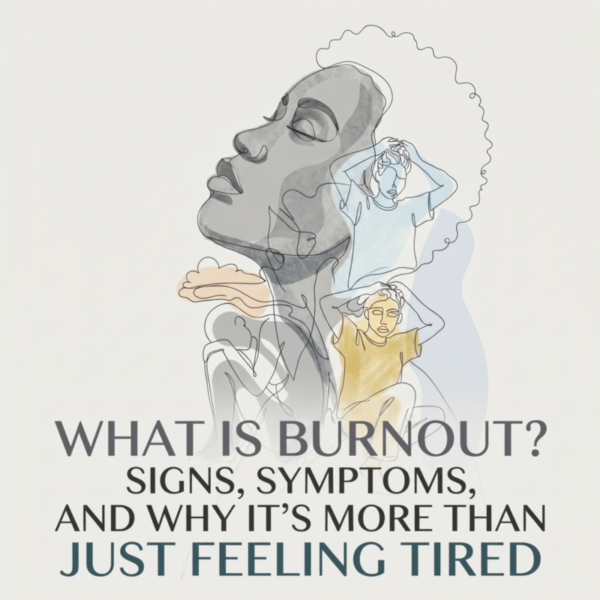
Pencil drawing of burned out teachers

As an Amazon Associate I earn from qualifying purchases.

Have you ever woken up on a Monday morning, stared at the ceiling, and felt an overwhelming sense of dread before your feet even hit the floor?

When you work in a high-intensity profession—like teaching, where your day is fueled by the auditory chaos of loud voices, constant chatter, and relentless bell rings—it’s easy to write off your exhaustion as “just a tough week.” You promise yourself that a quiet weekend or a long sleep will fix it.

But sometimes, the weekend comes and goes, and that heavy, hollow feeling doesn’t budge. That is because you aren’t just tired. You might be experiencing burnout.

Defining Burnout: It’s Not a Motivation Problem

At its core, burnout is a state of physical, emotional, and mental exhaustion caused by prolonged, excessive stress. It occurs when you feel completely overwhelmed, emotionally drained, and unable to meet the constant demands of your day.

The World Health Organization (WHO) formally recognizes burnout not as a medical condition, but as an occupational phenomenon. It is a predictable physical response to an environment where your output consistently exceeds your input.

When you reach the point of burnout, your nervous system is essentially operating on an empty tank. You have selflessly poured all your energy into your work and responsibilities, leaving nothing left for yourself.

My Story: When the “Excellent Special Ed Teacher” Evaporates

I didn’t actually know I was burning out when it was happening. If you had asked me at the time, I would have told you I was just having a vibrant series of terrible days. But the truth was much weirder: I honestly felt like my personality was changing, and I didn’t recognize myself.

According to my therapist, I have always had a “wide range of tolerance for dysfunction.” Honestly, that specific trait is what made me an excellent special education teacher. I was super patient with all the kids, I was a fantastic educator, and I was deeply proud of being the supportive, encouraging, relentless “you-can-do-it” teacher that everyone knew me to be.

And then, the burnout fully settled in, and I was different.

Suddenly, I completely lost the biological ability to repeat myself. I reached a point where I physically and mentally could not, one more time, say, “Sit down and do your work.” I have worked with kids with ADHD for years and loved them, but suddenly, I couldn’t do it anymore.

The most unsettling part? I found myself snapping at my students and using fear-based strategies just to get through the hour. I could see exactly what I was doing, but my nervous system was so fried that I was entirely unable to pause for a mere three minutes to wait for them to calm down and focus.

When I wasn’t feeling like a different person in front of my students, I was getting hot flashes of anger at my coworkers and admin. Now, to be fair, my concerns were entirely valid, and I was getting angry for very important reasons. But as a woman whose entire identity was built on being a patient, nurturing guardian of children, harboring that amount of anger felt deeply, unsettlingly wrong.

Instead of realizing my system was crashing, I went straight to self-flagellation. I felt racked with guilt and convinced that I was crossing a very sacred, important line that I had never touched in my entire career. I felt like a bad person. I got so profoundly trapped in that spiral of guilt that I couldn’t step away to see the bigger picture: my anger and lack of patience weren’t character flaws. They were dashboard warning lights giving me incredibly important information about my obliterated boundaries that I desperately needed to listen to.

The 7 Warning Signs of Burnout

Burnout doesn’t happen overnight; it is a slow, creeping process. Recognizing these red flags early is the first step toward reclaiming your quiet, calm energy.

1. Constant, Unremitting Exhaustion

Unlike everyday tiredness, burnout leaves you feeling physically and emotionally drained, even after getting enough sleep. You wake up tired, and basic daily tasks suddenly take significantly longer or require a massive amount of your remaining energy. For help getting better sleep, check out “The Sleep Solutions Educators Are Keeping Secret.”

2. Heightened Irritability, Anger, and Rage

When your mental and emotional reserves are entirely depleted, your patience wears thin. As I experienced, this doesn’t just look like mild frustration—it often manifests as an undercurrent of sudden rage and resentment. Because your system is completely overwhelmed, your brain loses its capacity to regulate intense emotions. You might find yourself easily snapped into a fury by minor inconveniences or losing your temper over trivial things.

3. Brain Fog and Poor Performance

Chronic stress severely impacts your working memory, attention span, and decision-making abilities. You may notice a frustrating increase in careless errors, missed deadlines, or a general difficulty focusing on simple, daily tasks.

4. Loss of Motivation and Cynicism

Tasks that once brought you joy or purpose suddenly feel pointless, overwhelming, or like a heavy chore. To protect itself, your brain starts to blunt its emotions, leading you to develop a cynical, detached, or negative outlook toward your responsibilities, colleagues, and personal life.

5. Social Isolation

When you are completely overwhelmed, interacting with others can feel like a massive drain on your remaining energy. You might find yourself avoiding friends, canceling plans, or pulling back from collaborative work and social spaces just to cope.

6. Physical “SOS” Signals

Burnout shows up in your body long before you consciously realize how overwhelmed you are. Your body carries the stress as physical warning signs, which frequently manifest as tension headaches, neck and back pain, muscle aches, an upset stomach, changes in appetite, or a weakened immune system that leaves you vulnerable to frequent colds. For help targeting physical pain, check out “What Are The Best Pain Relief Tips For Teachers?“.

7. Rest Isn’t Working Anymore

A classic hallmark of true burnout is that typical downtime, a long bath, or weekends off completely fail to restore your energy. Because the exhaustion has become chronic, you cannot simply take a quick break; you have to actively address the root causes of your stress to heal.

The Nervous System Under Siege: Why We Snap

When you experience chronic stress without adequate recovery windows, your nervous system gets trapped in a “fight-or-flight” loop. Your cortisol and adrenaline levels stay spiked long after you leave your workplace.

When you are locked in “fight” mode, that stress frequently bubbles over as anger, a short fuse, and rage. It isn’t because you have suddenly become a bad person or a terrible teacher; it is your nervous system actively trying to fight back against overwhelming demands when your “window of tolerance” has been entirely pushed to its limit.

Eventually, because the human body cannot sustain a permanent state of high alert, your nervous system pulls the emergency brake and drops into a “freeze” state. This physical circuit-breaker is what we recognize as burnout—it is your body’s survival mechanism forcing you to shut down and disengage because the sensory clutter has become too much to handle.

What’s Next?

Burnout is a heavy burden to carry, but it is entirely reversible. Recognizing the signs—including the uncomfortable anger and the loss of your usual patience—isn’t a sign of weakness; it’s a vital signal from your body that it is time to shift from survival mode into deep, restorative healing.

(Note: If you are experiencing severe or worsening symptoms, it is always highly recommended to speak with a healthcare professional or mental health counselor for personalized support.)

But how do you know if you are truly burnt out, or if you are just dealing with a standard bout of heavy, everyday stress? The recovery paths for each are completely different.

👉 Read Part 2: How is Burnout Different from Chronic Stress? to discover exactly where your nervous system is sitting on the stress spectrum.

What is your experience with burnout? Share with the community.

Affiliate notice: Some of the links in this description are affiliate links – if used, I will get a small commission at no cost to you. It’s just one more way to help me retire in this century. I only recommend things I use myself, that have really helped me personally or fully believe in! Thank you!

The Sleep Solutions Educators Are Keeping Secret

Continuous line drawing of a man sleeping and dreaming.

It was 3:00 AM, and I was staring at my ceiling, trapped in the ultimate insomnia choose-your-own-adventure. Do I flop around like a

Nutrition Tips For Teachers To Strengthen Immunity And Energy

A continuous line drawing of 10 plates of food.

There is a specific kind of morning betrayal that happens when you sleep through the night, wake up, and immediately…