

As an Amazon Associate I earn from qualifying purchases.
Struggling with a wandering mind during meditation? Welcome to the club. One minute you’re focusing on your breath, the next you’re planning a grocery list or cringing at a random memory from middle school.
If you feel frustrated, don’t. Brains just love to brain.
Every time you catch your thoughts drifting and gently drag them back, you’re actually doing it right. No judgment—that’s where the magic happens.
The good news is, every time you notice your attention has floated away and you gently bring it back, you’re actually practicing mindfulness in the most honest way.
I’m sharing some practical tips and insights for handling mind wandering with compassion and patience, so you can get the calming benefits of mindfulness even if your thoughts feel like they’re bouncing all over the place. And if you’re new to mindfulness, don’t worry—everyone faces this challenge. By learning these strategies, you’ll make your experience more rewarding and less stressful over time.
Accept Your Wandering Thoughts With Kindness
Mind wandering is a natural part of being human. Our brains are designed to drift, making up stories, solving problems, and replaying memories. When you sit down with an intention to be mindful, you’re not trying to shut off your thoughts or force blankness. You’re learning to watch your mind with kindness—even when it jumps from one thought to another.
Why the Mind Wanders
- Our brains are used to multitasking and thinking ahead.
- Old habits and stress can cause restless thoughts to pop up.
- The more you try to “force” away thoughts, the more persistent they can seem.
Accepting your wandering thoughts with a little kindness makes it easier to come back to your breath or body sensations. The real practice is in the gentle return, not in never drifting off. In fact, noticing mind wandering is a skill you build up, not something you “fix.”
Pick a Mindfulness Anchor That Works for You
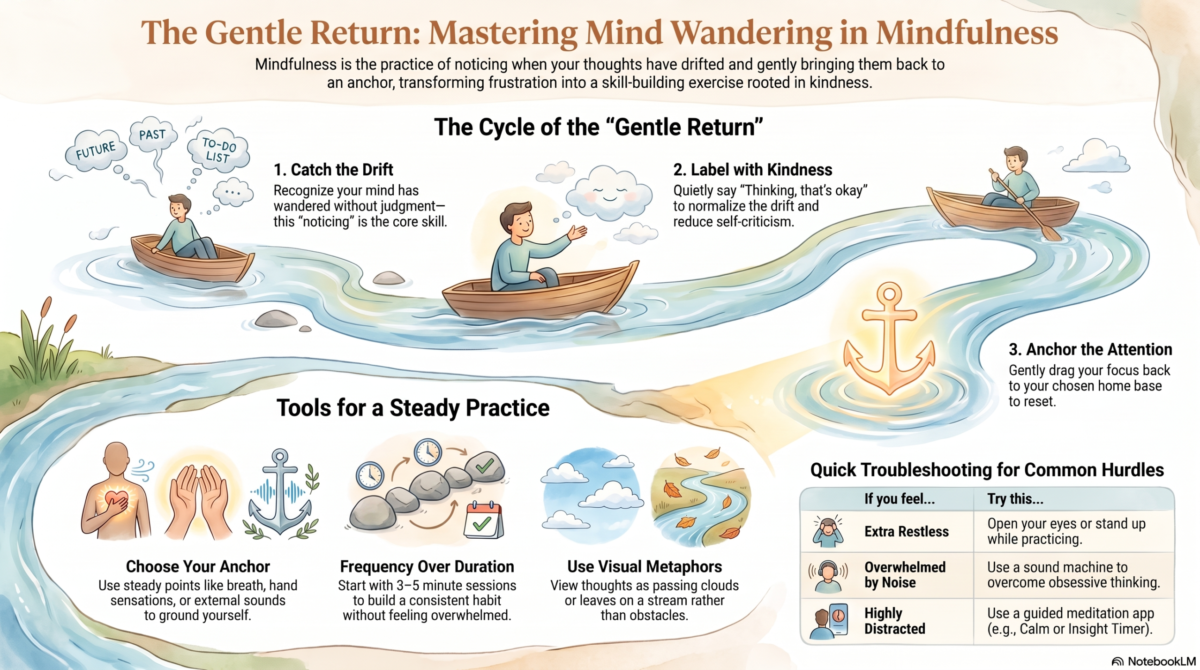
An “anchor” is a simple point of focus for your mind. The breath is a classic one, but anything steady and nondramatic works too. When your mind wanders, you’re just bringing your attention back to this anchor, over and over.
Common Mindfulness Anchors:
- Your breath: Noticing air moving in and out, or the belly rising and falling.
- Feeling in the hands: Noticing warmth, tingling, or subtle sensations.
- Sounds: Listening to whatever you hear, near or distant.
- Body scan: Slowly bringing attention to each part of your body.
- Guided Meditation: Listening to a gentle voice guide you into relaxation.
If focusing on the breath is tricky for you, try sound, sensation, or even an object in your room. There’s no perfect anchor, just what feels easiest and most natural for you. If you want to switch things up, you can also focus on the feeling of sitting or the rhythm of your steps as you walk mindfully. The anchor simply gives your mind a home base to return to, no matter how often it drifts away.
Practice Noticing Without Judgment
A lot of people get caught up in self-criticism or feel like they’re “failing” at mindfulness, but that’s honestly just another thought pulling your attention away.
The way you respond when you notice your mind has wandered is really important. Instead, a gentle and curious attitude works best and helps you stick with your practice longer.
Tips for Self-Kindness:
- When you catch your mind wandering, quietly say to yourself, “Thinking, that’s okay.” This gentle reminder normalizes the process and takes the edge off.
- Smile gently or place a hand on your heart as a reminder to be kind to yourself. A physical gesture can sometimes make emotional self-kindness more concrete.
- See thoughts as like clouds passing across the sky, or leaves floating down a stream. You don’t need to push them away or cling to them.
Mindfulness isn’t about judging yourself; it’s about seeing experience as it is, with a little kindness and curiosity. When you get into this habit, mindfulness turns into something enjoyable and sustainable.
Set a Realistic Practice Time (and Build Up Slowly)
Trying to meditate for long periods right away can make mind wandering feel even worse. If you’re new, or your thoughts are extra busy, short sessions are better. Even three or five minutes a day is impressive, and anything is better than nothing at all.
How to Find Your Starting Point:
- Pick a time of day when you’re not too tired or distracted. Morning, before bed, or right after work can work well for many people.
- Pick a comfortable spot with a blanket, favorite chair or meditation cushion.
- Pick a home base — if breathing doesn’t help, a sound machine can help overcome obsessive thinking.
- If you feel restless, open your eyes or stand up, but stick with the practice for just a few minutes.
Slowly, you can add more time as it feels comfortable. The regular habit matters more than the length. Over a few weeks, you might go from five minutes to ten, and then maybe even fifteen.
Bring Acceptance To the Full Experience
Trying to block out thoughts or force yourself to only feel calm can backfire. Instead, welcome whatever shows up—including busy, random, or even unpleasant thoughts. It’s not about clearing your head, but just about being with what’s there and letting it come and go in its own time.
Ways to Practice Acceptance:
- Notice when you’re judging your thoughts or feelings. Can you soften a little?
- Remind yourself that everyone’s mind wanders, and it doesn’t mean anything is wrong.
- Try silently saying, “This is part of mindfulness,” if a troubling or distracting thought comes up.
You can sit in a sense of gentle acceptance, the same way you might comfort a friend who’s struggling. All experiences, even restless minds, are welcome here. This approach takes the pressure off and makes your practice lighter.
Simple Mindfulness Reminders for Wandering Minds
Little reminders or rituals can help you stick with mindfulness, even when it’s tough. These acts don’t need to be complicated or fancy. They’re just ways to nudge your attention back to the present, over and over. One example is to have a special chair, cushion, or space in your home just for mindfulness. This physical prompt can help train your mind to settle into the present moment faster.
Quick Reminders:
- Place your hand on your belly as you breathe, and really notice its movement. This brings your focus right into your body and helps block out distractions.
- Return to a sound: the hum of a fan, a singing bowl, birds outside, or just your own breath.
- Repeat a gentle word or phrase, like “Here” or “Now.”
- Gently smile—even a tiny smile can make the mind softer and less critical.
These small actions can feel grounding and help break a loop of self-criticism when your mind inevitably drifts. Over time, these simple reminders can become habits that reinforce your mindfulness practice.
Common Questions & Mind Wandering Troubleshooting
What if I can’t bring my attention back at all?
This happens to everyone, especially on stressful days. If your thoughts are really loud, just notice, “Wow, my mind is really active right now.” That’s mindful awareness, too! You can even choose to end the session early and try again later—there’s no shame in that and it doesn’t mean you’re doing anything wrong.
Should I try guided meditations?
Guided meditations are super helpful for people with wandering minds. A calming voice giving gentle directions can make staying present much easier. You can check out free apps or YouTube channels if you’re not sure where to start. Finding the right voice or style can make all the difference in sticking with your practice. Some popular options include Calm, Headspace, and Insight Timer.
Is it normal if I get frustrated when my mind wanders?
Getting annoyed when your thoughts stray is super common. You can notice that frustration as just another thought or feeling; you don’t need to fight it. Sometimes saying “Oh, there’s frustration” silently can help you step back from it and see it for what it is—a passing emotion.
Encouragement & Next Steps
Struggling with mind wandering during mindfulness practice is part of the whole experience, not a sign you’re doing something wrong. Every gentle return to the present moment, no matter how scattered you feel, builds your mindfulness muscle. Remember, it’s not about perfection but about cultivating a friendly curiosity toward whatever happens in the mind.
Your Kindness-Based Mindfulness Game Plan:
- Pick a practice time and setting that’s comfortable for you.
- Choose an anchor (breath, sound, sensation) that feels easy.
- Every time you notice you’ve drifted, silently say “thinking” and bring your focus back, with kindness.
- If you get frustrated or bored, accept it as part of mindfulness, too. It’s totally normal and will get easier with practice.
- Praise yourself for showing up—every session counts, no matter how busy your mind feels.
Be gentle with yourself. The mind will wander, and that’s okay. When you notice it, just come back to your anchor. No pressure, no drama, just kindness. What’s one way you’ll bring a little more self-compassion into your practice today? To make things easier, you might try journaling about your mindfulness sessions, sharing your experiences with a friend, or setting a gentle reminder on your phone. Over time, you’ll find that the act of returning to your focus becomes more natural, and mindfulness practice becomes a source of calm and clarity—no matter how many times your mind drifts along the way.
What works for you when you meditate? Share your tips below with the community.
Affiliate notice: Some of the links in this description are affiliate links – if used, I will get a small commission at no cost to you. It’s just one more way to help me retire in this century. I only recommend things I use myself, that have really helped me personally or fully believe in! Thank you!