As an Amazon Associate I earn from qualifying purchases.
A Quiet Note Before We Begin:
If you opened this article looking for a high-intensity summer body blueprint, you won’t find it here. Our bodies have spent ten months carrying the weight of a classroom, an administration, and a system stretched to its limits. This space is for quiet relief. Below, I’m sharing the real reason your fitness goals feel impossible right now, along with a few gentle, low-friction tools I keep in my own home to help my nervous system feel safe enough to move again.
Table of Contents
The July Collapse: When Your Body Finally Keeps the School Year
Every June, we promise ourselves the same thing: “As soon as summer break starts, I’m going to get back in shape. I’m going to run, go to the gym, and finally take care of myself.”
Then July arrives. You wake up without an alarm, look at your running shoes, and feel an overwhelming wave of paralysis. You find yourself sitting on the couch for hours, staring at the wall, or tracking the hours of daylight without the physical strength to step into them.
Let’s call this what it actually is: The July Collapse.
When you are in the classroom, your body runs on pure adrenaline and cortisol. It keeps you moving through back-to-back IEP meetings, endless grading cycles, and the constant sensory bombardment of a school building. Your brain doesn’t have the luxury of feeling tired; it is in pure survival mode.
But the moment the final bell rings and the pressure drops, your nervous system finally feels safe enough to stop fighting. The exhaustion you are feeling right now isn’t a choice; it’s the accumulated debt of an entire school year that your body is finally forcing you to pay.
The Science Behind Why Your “Zero Motivation” is Actually Nervous System Protectiveness
When you search for answers online, fitness culture tells you a dangerous lie: “You just lack discipline. You just need to want it bad enough.”
As educators, we know how to work hard. We routinely sacrifice our lunches, our prep periods, and our mental peace for others. You do not lack discipline. The unspoken truth about why you can’t exercise consistently right now is that your brain is actively protecting you from what it perceives as further trauma.
When you are suffering from deep teacher burnout, your nervous system is trapped in a “Freeze” or “Functional Low-Energy” state. To your brain, a workout is not a wellness ritual—it is stress.
- A high-intensity cardio session feels like running from a predator.
- Heavy weightlifting feels like fighting a threat.
If your internal batteries are at 2%, pushing yourself into a grueling workout routine causes an immediate system crash. Your brain recognizes this danger and cuts off your motivation entirely to keep you safe on the couch. Your “zero motivation” isn’t a personal failure; it’s a beautiful, protective mechanism of a body that desperately needs somatic rest before it can handle physical conditioning.
Transitioning From Survival Mode to Soft, Restorative Micro-Movement
To bridge the gap between deep burnout and consistent movement, we have to change the definition of what a “workout” looks like. We have to decouple exercise from sweat, strain, and numbers on a screen, reframing it as a path to quiet, physical comfort.
Instead of forcing yourself out the door for a three-mile run, lower the bar until it sits softly on the floor. Focus on micro-movements—small, gentle shifts in posture and mobility that tell your nervous system, “We are safe, we are home, and it is okay to let go of the tension in our shoulders.”
Try shifting your perspective using these gentle guidelines:
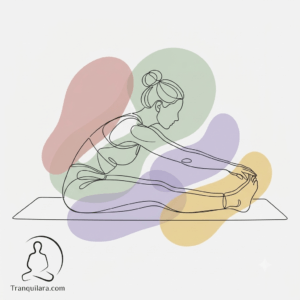
- Move horizontally first: If standing up feels like too much, do your stretching entirely on this thick, comfortable, best selling yoga mat.
- Prioritize rhythm over intensity: Rhythmic, repetitive motions (like cat/cow, child’s pose, or hamstring stretches) gently signal stability to an anxious brain.
- Protect your senses: Reduce the sensory input around you while you move. Dim the lights, turn off notifications, and block out the auditory clutter that you had to endure for the last ten months.
Gentle Tools to Support Your Body While You Rebuild Your Energy
You don’t need a gym membership or an expensive apparel haul to begin moving again. When I am crawling out of a period of deep occupational exhaustion, these are the three specific tools I keep in my living room. They don’t demand high energy; instead, they meet me exactly where my energy level sits on any given summer afternoon. The purpose is to simply reconnect with my body and discover how I’m really feeling and what I really need.
1. Active Rest via Passive Engagement
When sitting on a hard chair or the couch leaves your lower back aching from months of desk-side teaching, swapping it out for a dedicated stabilization tool can create passive, comforting alignment. I often spend fifteen minutes just gently rocking side-to-side while checking emails, watching the kids or listening to a quiet podcast.
- What I use: The Trideer Exercise Ball is made of extra-thick, anti-burst material that gives your joints a soft, forgiving surface to lean into. It allows you to gently move your hips and decompress your lumbar spine without ever forcing you to stand up or strain a single muscle.
2. Targeted Somatic Tension Release
Ten months of holding stress manifests as literal, physical knots in our upper back, neck, and shoulders. Traditional foam rollers can sometimes feel too rigid and aggressive on a sensitive, exhausted body.
- What I use: The The Original Worm Roller Massage Tool combines the targeted relief of therapy balls with the stability of a traditional roller, all encased in a soft neoprene sleeve. It is gentle enough to lay on right in bed or on a rug, allowing gravity to softly massage out the deep physical tension left behind by the school year.
3. Sensory Decompression for the Mind
True recovery isn’t just about moving your muscles—it’s about calming your mind. The auditory environment of a school leaves many teachers suffering from a quiet form of sensory processing fatigue that makes focusing on your own breathing feel nearly impossible.
- What I use: The Loop Engage Earplugs don’t completely isolate you in silence; instead, they subtly take the edge off the harsh, ambient background noise of the outside world. Wearing them during a gentle evening walk or a home stretching session provides an immediate layer of quiet cognitive relief, allowing you to return to your body without the distraction of external noise.
Give Yourself Permission to Wait:
If all you can manage today is to lay on your living room floor and breathe deeply for five minutes, let that be enough. Healing from teacher burnout isn’t a race with a September deadline. It is a slow, gentle reclamation of your own peace—one quiet choice at a time.